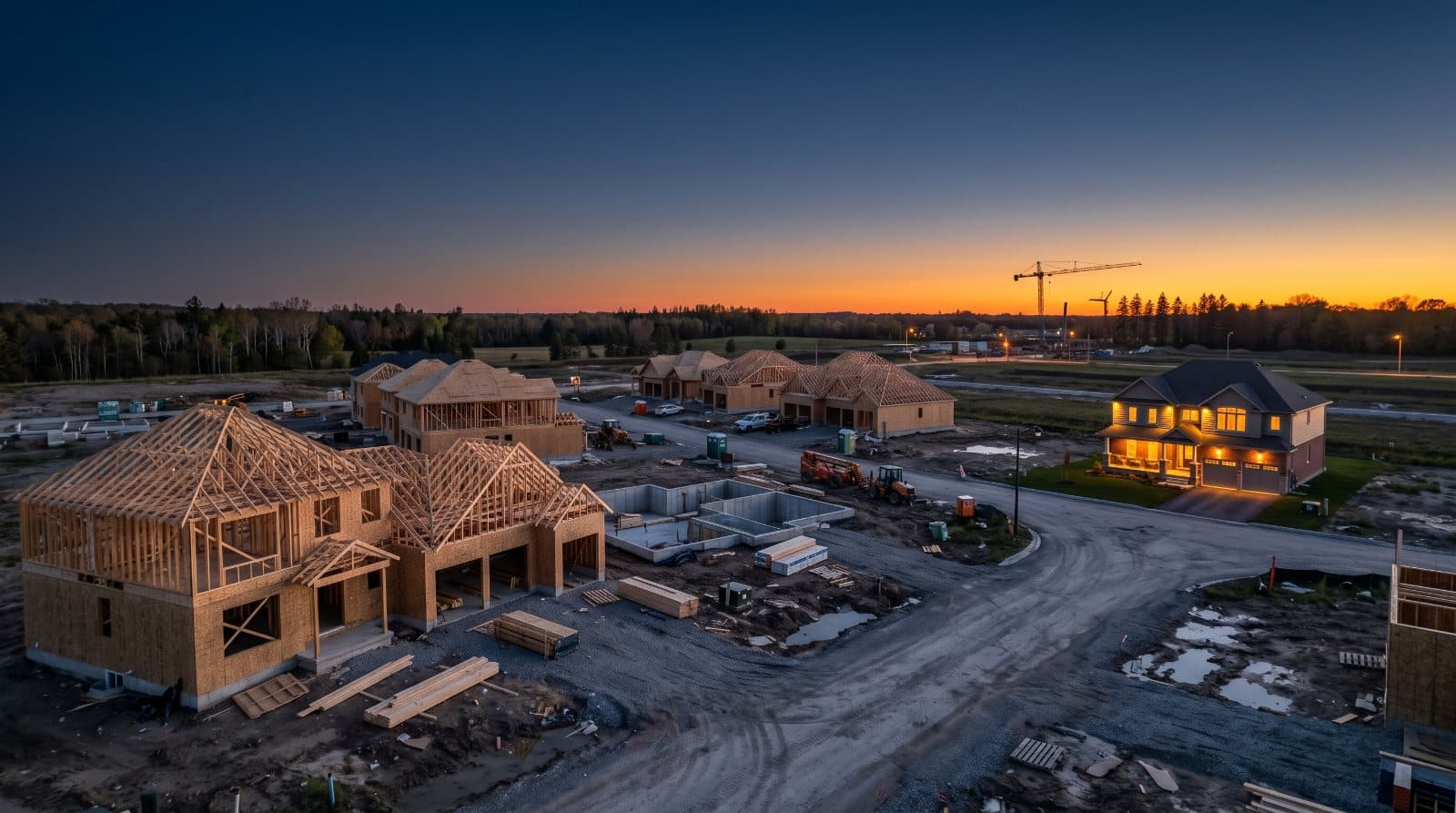
When a house in Aurora or a commercial unit in Markham changes hands, the signed Agreement of Purchase and Sale sets the rules of the deal. Between acceptance and registration, your real estate lawyer confirms two things: that the seller can give you clear title, and that the money on closing day moves in the right order. Most closing-day problems trace back to one of those two.
The requisition date is your window to object
Every standard resale agreement in Ontario gives the buyer’s lawyer a fixed date, the requisition date, to search the parcel register under the Land Titles Act, R.S.O. 1990, c. L.5 and send the seller’s lawyer written objections, called requisitions. The Vendors and Purchasers Act, R.S.O. 1990, c. V.2 fills in how objections are raised and answered where the agreement is silent. Once the date passes, a buyer generally loses the right to insist on fixes for problems that don’t go to the root of title.
Before that date, we look at five things:
- Registered charges, writs and security notices. Every bank mortgage, private second or third, line of credit and notice of security interest on the register needs to be paid out and discharged. Where a bank discharge will only register after closing, the seller’s lawyer gives a written undertaking to get it done.
- Neighbouring land and subdivision control. We search the abutting parcels under section 50 of the Planning Act, R.S.O. 1990, c. P.13. If a past owner split or merged lots in breach of subdivision control, the transfer may not convey the land at all.
- Easements, covenants and work orders. Utility easements, shared driveways (common in older parts of Newmarket and Richmond Hill) and open municipal work orders can limit what you are allowed to do with the property.
- The condo’s finances. The status certificate under section 76 of the Condominium Act, 1998, S.O. 1998, c. 19 shows the reserve fund, any lawsuits against the corporation and any special assessment coming. You want to read it before the deal goes firm.
- Who the lawyer can act for. Co-buyers may need joint-retainer disclosure. A private mortgage or a vendor take-back (VTB) mortgage may need the lender to have its own lawyer. Sorting this out early avoids a delay when the lender’s instructions arrive.
Some deals need extra steps from day one. New builds (Tarion addenda, HST rebates), assignments, non-resident speculation tax questions and non-resident sellers under section 116 of the Income Tax Act each bring their own paperwork. Flag them before the offer is signed, not after.
Same-day sale and purchase: the numbers have to be exact
In Aurora, King City and across the GTA, a lot of buyers pay for the next house with the equity from a sale closing the same day. A double closing has no room for estimates. The sale has to close, the proceeds have to reach your lawyer’s trust account (by an electronic trust transfer under LSO By-Law 9, Form 9A), and the mortgage payouts have to clear, all before your purchase can register that afternoon.
We work the numbers in three steps the week before closing:
- Net sale proceeds. Start with the sale price and apply the statement of adjustments, using a current tax certificate that shows arrears and this year’s instalments on separate lines. Then deduct the actual mortgage payout figure, the commission plus HST, and the legal fee for the sale ($1,500 + HST at Barbarian Law®) with disbursements.
- Balance due on the purchase. Add the net sale proceeds to the new mortgage advance. Subtract the purchase balance, Ontario land transfer tax (less up to $4,000 for eligible first-time buyers; see five mistakes first-time buyers make), the title insurance premium, and the legal fee for the purchase ($1,650 + HST with one mortgage), plus registration costs of $85.00 per transfer or mortgage ($86.42 from November 2, 2026) and the $50.85 closing software fee.
- Timing. Find out whether bridge financing is in place in case the sale buyer’s lender funds late, and make sure both lawyers have the electronic documents signed and ready to register the moment the money lands.
Before you sign: a short checklist
- Have the agreement reviewed first. Schedules, chattels, rental equipment, financing conditions and the requisition date are all easier to fix before you waive conditions.
- Get the double-closing math in writing. It should be built from real payout statements and a current tax certificate, not estimates.
- Order the condo and planning searches early. A status certificate under the Condominium Act, 1998 and Planning Act searches take time.
- Settle who acts for whom on day one. Joint-retainer disclosure for co-buyers and independent advice for private lenders should be dealt with when the file opens.
Closing with Barbarian Law®
Barbarian Law® (14981 Yonge Street, Upstairs, Aurora, ON, L4G 1M5) acts on residential and commercial purchases and sales, refinances ($1,250 + HST), title transfers ($1,000 + HST) and commercial leases across York Region and the GTA, with more than $150 million in completed transactions. Our real estate fee breakdown and full fee schedule are published.
- A written estimate first. You get the fee and the disbursements in writing before any work starts.
- Invoiced after the work is done. No deposit and no retainer held in trust.
- One lawyer throughout. Karim Eshqoor handles the file himself, from the agreement to registration.
Frequently asked questions
Requisitions, double closings and fees.
What is the requisition date in an Ontario real estate deal?
It is the date in the Agreement of Purchase and Sale by which the buyer’s lawyer must finish the title and off-title searches and send the seller’s lawyer any written objections (requisitions).
What happens if the seller can’t fix a title problem before closing?
Under the standard Ontario agreement of purchase and sale, if the seller can’t or won’t fix a valid objection to title, the buyer can generally end the deal and get the deposit back. Smaller issues, like a bank mortgage that will be discharged after closing, are usually handled by a written undertaking from the seller’s lawyer.
How does a same-day sale and purchase work in Ontario?
Your sale closes first and the net proceeds go to your lawyer’s trust account. That money, together with any new mortgage, pays the balance on your purchase, which then registers the same afternoon. If the sale is late, the purchase is late, so the numbers and the timing are checked in advance.
What are Barbarian Law®’s real estate fees?
A purchase with one mortgage is $1,650 + HST, a sale is $1,500 + HST, and a refinance is $1,250 + HST. Registration costs ($85.00 per transfer or mortgage ($86.42 from November 2, 2026), plus a $50.85 closing software fee) and title insurance are listed separately at cost.
When do I pay the legal fee?
You get a written estimate before work starts. There is no deposit, and the invoice is issued when the deal closes.
This article is general information, not legal or tax advice, and reading it does not create a lawyer-client relationship. For advice on your own transaction, contact Barbarian Law®. Barbarian Law® is a registered trademark (CIPO Reg. No. TMA 1,359,734).